In short
If your dashboard shows 100% completeness but Amazon suppresses listings or Google disapproves feeds, your data isn’t channel-compliant. The fix is channel-specific requirements, enforced validations, and a feedback loop between what you send and what publishes.
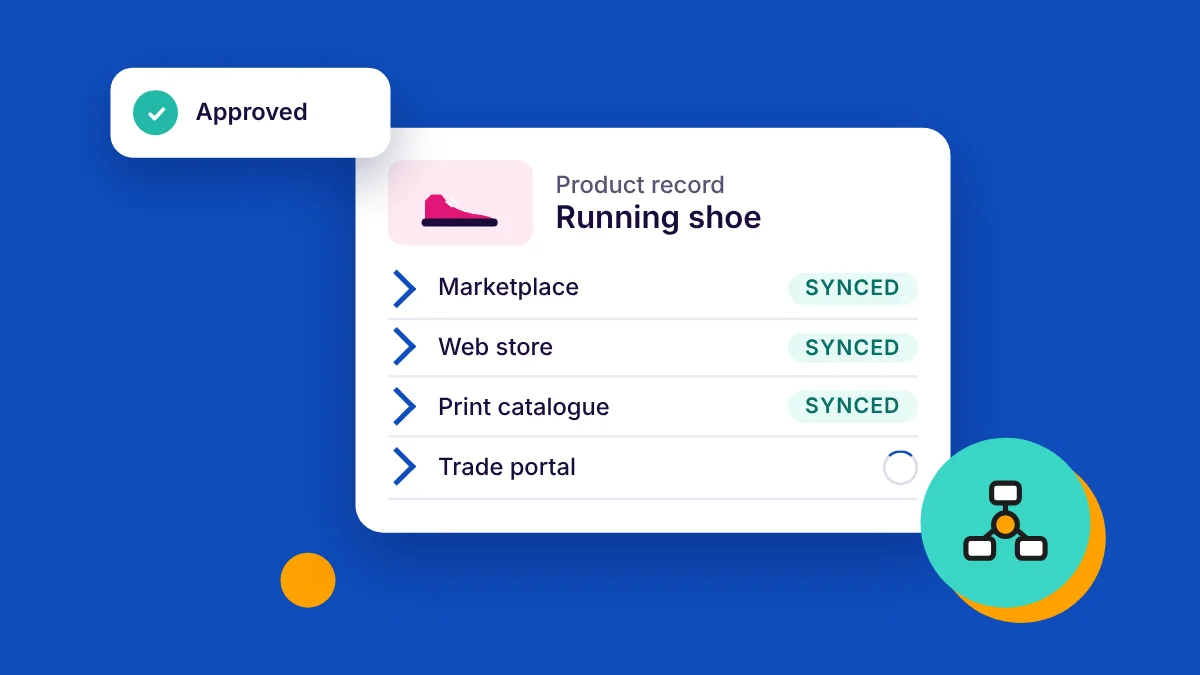
Many marketplace listings fail to fulfil compliance even when you put enormous effort into them. Why? Because what you consider “complete” versions of product data is defined internally. Different marketplaces enforce different standards, so your documentation must display channel-specific validity. Those standards typically include criteria like:
If you ignore or misunderstand those requirements, you’ll have to keep reworking feeds, chasing unexplained errors, and missing sales opportunities, all while the catalogue looks “green for go!” on your dashboards.
The nub of the issue is that this problem is a data failure, not a workload failure. What’s more, the severe operational consequence is repeated rejection and channel suppression. The commercial impact is a lack of search visibility, overlong time to market, and too many preventable returns.
The majority of PIM or ERP completeness metrics confirm only that a field contains something. Unsurprisingly, marketplaces don’t care that a field is simply filled. They need it to be filled correctly for a given category, locale, and policy set.
Here are a few common examples of data which doesn’t fulfil completeness records for popular channels:
When a marketplace rejects a listing, it’s usually exposing a predictable gap between your internal schema and their external schema.
You can have the richest of enriched data but still fail the standard simply because the item is mapped to the wrong category node (that is, the specific, named location within a hierarchical structure which organises products by characteristics). Marketplaces behave differently by node, so any slight misclassification ends up:
The operational pattern is familiar: the feed apparently uploads successfully, but when it is published, content is truncated, attributes disappear, or in the worst case, the listing is suppressed. That leaves teams chasing the symptoms (which usually involves fixing fields) rather than fixing the root issue – the mapping logic.
Many teams treat a trouble-free export as ‘success.’ Case closed. Only, it isn’t. Marketplaces interpret data after ingestion, and then apply defaults, merge contributions on shared listings, and sometimes even override your content based on their own hierarchy.
This creates the most damaging failure mode: you have no visibility regarding the difference(s) among:
Without this data reconciliation step, you’ll only discover these problems when revenue starts to fall, you experience a spike in customer queries, or you receive an account warning.
Certain channels and marketplaces validate against your site, not just your feed. That’s when price and availability mismatches often occur, because the two systems are out of sync:
As such, the data can appear to be ‘complete’ in both places, yet it still fails because the channel checks using the criteria of consistency at the precise time of crawl, not just your internal truth.
Images are a ubiquitous cause of failure. Teams often treat them as ‘present/not present,’ but marketplaces are very particular about digital assets, enforcing strict rules on:
Moreover, beware of supplier-sourced imagery because its default format is often non-compliant. If you don’t validate image standards upstream, you will condemn yourselves to constant resubmissions.
The root cause is that channel requirements are either not captured in your data model, not translated correctly, or not enforced through validation rules and workflows. Three gaps in governance lie behind the majority of repeated failures:
1) Stabilise: stop rejection and suppression cycles
2) Standardise: build channel-ready structures
3) Enforce: make compliance automatic
If ‘complete’ reminds you more of disaster than data, don’t blame your teams for low productivity! It’s much more likely that you’ve got a channel compliance gap in your model, mapping, and enforcement. Reach out to us today at Start with Data for a discovery call. We’ll identify the specific rules you’re missing, where the mapping breaks, and how to implement a pre-syndication validation framework so that your marketplace and channel listings pass first time with flying colours!

Fill in your details and we will send it straight over.
Sourcing, supplier onboarding and enrichment for product data, delivered as a service.

