In short
Good product data is usable, consistent and governed. Learn how to assess quality properly, where most catalogues fail, and what to fix first to reduce rework, feed errors and customer friction.
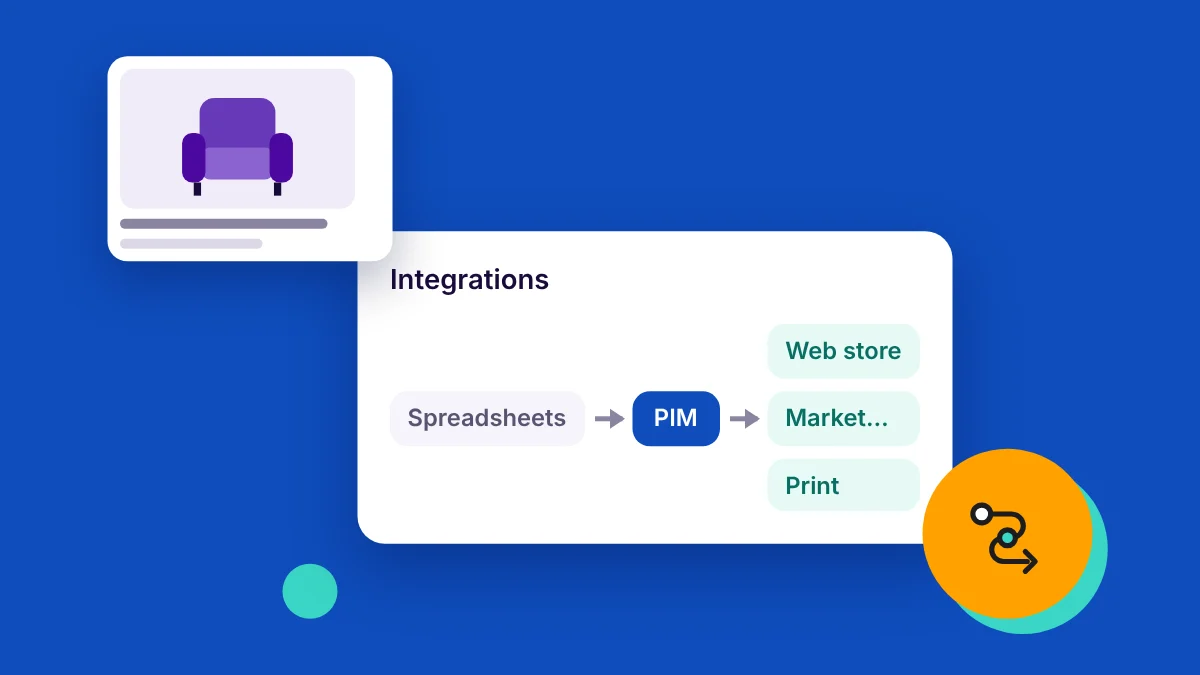
It’s hardly surprising that the vast majority of businesses proclaim how important the quality of their product data is to them. Nevertheless, very few of them can define it in a way that holds water across eCommerce, marketplaces, operations and IT. That gap in how ‘quality’ is perceived easily creates departmental friction: Suppliers send inconsistent data, teams fill in fields differently, feeds to channels get rejected, and, if the enriched data does get to them, customers complain about incomplete or confusing product information.
This article defines what high-quality product data actually looks like, why teams struggle to agree on it, and how to assess whether your catalogue is usable enough to support growth.
In general, the problem isn’t a total lack of data. Rather, it’s caused by each functional area applying different criteria:
All of the above are legitimate needs, but none of them on their own is a sufficiently comprehensive definition. This is why a product catalogue can look ‘complete’ in a PIM or ERP but still fail in practice. The data exists, but it doesn’t work properly downstream.
This is the real definition: Good product data is data that can be used, reliably, by the people and systems that depend on it.Three core elements are non-negotiable – they must exist.
These have to reflect the product as sold because incorrect source data will lead to more returns, more customer complaints, more channel rejections and more rework.
The same attribute must mean the same thing across categories, suppliers and systems. If one supplier sends “BLK”, another sends “Black”, and a third sends “Jet Black”, your search filters are bound to buckle, your analytics become fragmented and your approval workflow turns into a tiresome and never-ending manual cleanup loop.
This is the area where most product data quality programmes fall down. You can populate a field and, technically, it’s valid. However, it may still be unusable for search, comparison, syndication or fulfilment. Quality product data must support some kind of action, such as:
A customer who needs to compare products
A merchandiser who wants to be able to publish without chasing missing specs
A marketplace feed which will pass validation
A warehouse team who need to identify the right item
A returns analyst who needs to trace whether bad data caused the return.
That is what quality looks like in operational terms.
An effective way to judge product data is to measure it across four dimensions.
1. Completeness in context
Completeness is important, but only when measured against channel and process needs. A website category page, a marketplace feed and a printed technical sheet won’t require the same level of detail. ‘Complete’ should mean ‘complete enough for the intended use’, not ‘complete’ simply for the sake of ensuring fields are filled.
2. Standardised structure
Attributes need to possess clear definitions, allowed values, validation rules and ownership. In their absence, teams will inevitably improvise. Suppliers tend to submit ‘whatever we have’. Internal users overwrite each other. Eventually, the same product type ends up with multiple formats for size, material, voltage or suitability. Standardisation minimises the need for rework and makes it much easier to scale your product information.
3. Human-readable content
Product descriptions, feature bullets and usage notes clearly need to make sense to real buyers. Using internal shorthand, copied supplier copy and vague claims isn’t going to help people choose wisely. High-quality content explains the product in plain language while remaining aligned with the structured attributes behind it.
4. Trust, underpinned by a governance framework
Every critical attribute needs a single source of truth, an approval gate and a rule for when and by whom it can be changed. If ownership is unclear, data debt accrues in the background. Teams then deal with the symptoms in spreadsheets and not the actual causes in the master record. Data governance is the safeguard which prevents quality slipping back after a cleanse.
A weak product record might include the basics:
On paper, you could claim “it’s complete”, but in the real world, it just creates more work. Search terms don’t match customer language. Comparison tables are thin. Marketplaces reject missing or badly formatted values. Customer service has to answer avoidable questions.
A genuinely strong product record is substantially different:
This record doesn’t just sit in a system. It flows through the business seamlessly.
There are still many businesses who fail to reach that point, and the reason is predictable: Nobody owns the full quality standard. Governance is the responsibility of one team, another team controls enrichment, supplier onboarding is monitored somewhere else, and feed management somewhere else again. Then Tooling will only amplify the problem. A PIM, ERP or syndication platform gets treated as the fix, when the real, underlying issue is weak definitions, inconsistent templates and unclear accountability.
Your go-to remedy is corrective, not theoretical.
Identify the attributes which drive channel acceptance, like conversion, fulfilment and returns. Fix the highest-risk gaps first. Focus on records and categories causing the most manual effort.
Define attribute definitions, value lists, supplier templates, validation rules and approval gates. Then, remove local variations which break comparison and filtering.
Make these standards an integral part of onboarding, enrichment and publishing workflows. If product data does not meet the rule, it should not progress.
Once these corrective measures are in place, the gains are measurable:
Good product data is not data that is just ‘there’, merely existing. ‘Good’ data means it performs. If your catalogue is creating rework, feed errors or inconsistent customer experiences, the issue probably isn’t volume. It’s most likely the absence of a clear, enforced quality standard. Contact us today and we can discuss how to benchmark your product data against a usability-led standard and identify where it is breaking down.

Fill in your details and we will send it straight over.
Sourcing, supplier onboarding and enrichment for product data, delivered as a service.

