In short
Discover how database normalisation improves product data quality, reduces duplication & supports scalable PIM.
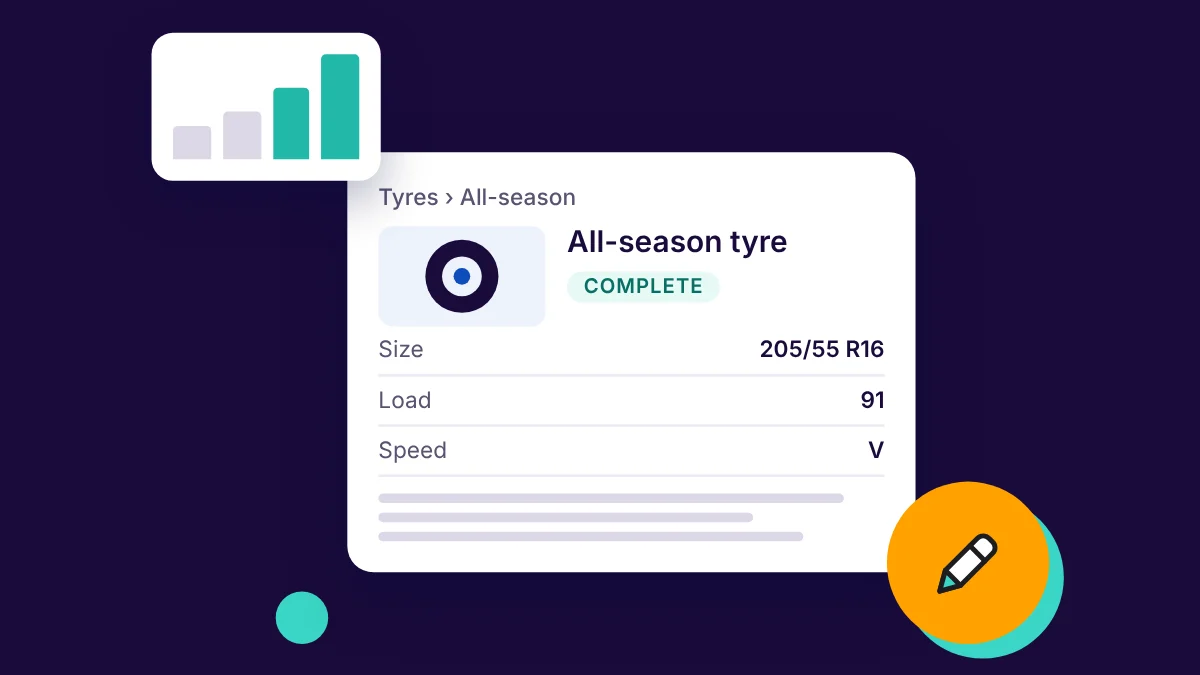
Database normalisation is the business process of structuring a relational database in line with a series of ‘normal’ forms to minimise data redundancy and enhance overall data integrity. Put simply, it means that you carry out a process of eliminating errors, discrepancies, and duplicates among stored and collated product information. How? By analysing the information in your product tables and the connections existing among diverse information sets.
Product information management can only work optimally if your product data is consistent, reliable, up-to-date, and transparently organised. It streamlines your data, and simplifies your database as far as possible, making it more concise. Comprehensive product data normalisation makes information about products much easier to find, edit, extract, and deploy across whichever sales channels you use.
The fact is the majority of product-centric businesses are failing to give the attention and resources needed for database normalisation. Either they simply overlook its importance or choose not to carry it out because of the investment of time and effort needed. However, the bigger a business becomes, the more extensive (and data-heavy) its product offering becomes, and the more damaging poorly organised product data becomes to not only its operations, but also its strategic development and ultimate fulfilment of business goals.
So, a well-organised product database brings multiple advantages, the most notable of which we outline below.
The consistency and reliability of your data is guaranteed because the database will not get infected with out-of-date information, duplicates, and an ambiguous link hierarchy among your products.
Apart from removing errors, database normalisation allows you to visualise clearly how data from different tables relate to each other. This improves data connection visibility throughout the database, which in turn ensures that all product-related teams across your organisation are accessing trusted data.
Database normalisation is also useful when you implement product data management software, such as a PIM solution. With an organised database, getting a PIM up and running is much quicker and easier if you have the certainty of a well-organised database to start with, because connecting it and integrating it with other systems isn’t prone to the risk of errors and inherent inaccuracies in synchronisation.
By implementing improved storage and mapping, data is more logically arranged and easier to find and utilise for users across the organisation.
Keeping data secure is key, and a further benefit of data normalisation is the certainty that data is more accurately located, and that users accessing it know they don’t need to waste time and effort cross-checking its correctness.
Data normalisation is simply cheaper in the long run. Once normalised, and with ongoing monitoring and governance rules in place, it is far easier to maintain existing databases and make new additions. You also gain in speed of operations when connecting data sources to other systems, internal or external, because you don’t need to recheck or revise to make sure that any product data sent is 100% correct.
Depending on the type and context of the business (retailer, distributor, or manufacturer) the process will have different aspects.
The advisable option is to get expert guidance and support but we can summarise a generic data normalisation process:
No serious merchant collects product data and archives them never to be consulted, extracted, analysed, used, or enriched again. Today’s crowded and competitive digital commerce market means businesses must strive to leverage the increasing large volumes of information needed (in fact, demanded) to drive conversions and inform strategic growth decisions. Data normalisation isn’t an optional add-on – it is foundation for verifiable data quality as well as to your long-term and effective management of data as assets.
In the context of eCommerce and omnichannel, product data normalisation will make for not only measurable improvements in catalog management, but smarter catalog management. A PIM solution enhances the management and manipulation of product data, but for its optimal use, it must be predicated on normalised data.
That’s why having a normalised product catalog structure is a baseline requirement for ensuring that a business’s product lists share a coherent format. That means no duplicate information, no missing fields unaccounted for, and no inconsistent data points. Having a sorted view of products allows you to manage ever-growing product lines in an agile and responsive way – any changes or modifications can be added at the speed needed to keep pace with time to market.
Clearly defined and organised product catalogs boost channel performance, reduce time, and offer the kind of user experience which customers are demanding nowadays.
At Start with Data, we offer a range of consultancy services precisely designed to support your journey towards digital. These include guidance and tools for data normalisation and data cleansing. So, let’s talk! get in touch with us to tell us about your situation and find out more about how we can help you with your data normalisation initiative.

Fill in your details and we will send it straight over.
Taxonomy design and enrichment: structured attributes and complete product content across your catalogue.

Talk to us about taxonomy design and enrichment for your catalogue.
