In short
If your PIM is “live” but teams still ship product content via spreadsheets, it’s rarely a tech issue. It’s ownership. IT can keep pipelines running, but product data teams must own definitions, standards, workflows, and channel readiness—or adoption stays contested and value decays.
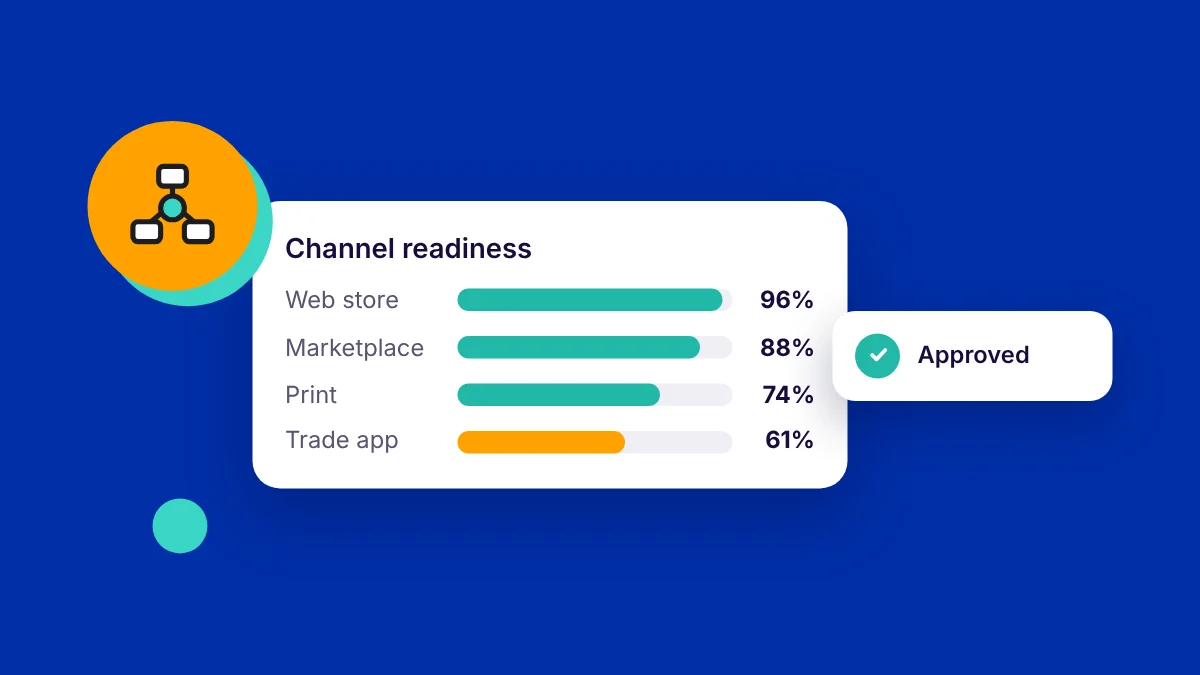
Your PIM can be technically live and still operationally dead. It may be the case that the integrations run, the User Interface loads, the licences get renewed, but the fact is, the business is still shipping product content through manual correction and completion of spreadsheets (usually through endless email back-and-forth).
When this is the state of affairs, ownership of product data usually defaults to the IT team because, after all, PIM looks like software, doesn’t it? So, tickets go to the service desk, success gets measured in uptime alone, but in the meantime, the real failure mode remains untouched and largely unnoticed: There’s no-one accountable for whether the product data being used is actually sellable.
Gartner, the PIM industry analyst, and ‘scorer’ has its own market definition which makes the point plainly: PIM exists to enable product, commerce, and marketing teams to create and maintain an approved, shareable version of rich product content for multichannel use. That is a business operating model, not an IT infrastructure deliverable
A PIM system sits in your tech stack with its APIs, connectors, permission models, environments, and version updates and patches. As a consequence, businesses generally assume it ‘belongs’ to IT. Moreover, IT accepts it because they’re clearly the only team which has a clear mandate to run systems.
But the genuine value of a PIM solution doesn’t come from running ‘the system’ alone. Rather, it comes from resolving product meaning into structured data which your downstream sales channels can trust. If ownership lies in the hands of IT, there are four predictable behaviours which emerge:
In the end, none of this is a failure of the technology. It’s simply a lack of data ownership.
PIM operations involve decisions, not configuration. Namely, decisions about:
Those decisions should belong to the people who are closest to product and channel performance:
These people are the ones who understand the commercial consequences of bad data:
All the above aligns with the reality which Gartner highlights regarding intended PIM users: A PIM is designed primarily to support merchandising, marketing, creative and operational roles across the organisation (and often external business partners), not just your technical administrators.
Many merchants tend to blur two kinds of ownership because as they see it, both “touch the PIM.”
In fact, ownership responsibilities need to be separated:
IT should own:
Product data teams should own:
If we mix those responsibilities, the PIM becomes a kind of ‘political buffer.’ Everyone washes their hands and blames someone else. Data quality becomes “an issue with the system.” User adoption becomes a top-down “training area.” But in the real world, both these examples are issues which impact on ownership.
If you want to know whether your PIM is operating as a product data capability or an IT system, there’s one question to ask yourselves:
Who arrives at work responsible for whether the product data we use in our channels is actually selling our products?
If the honest answer is “IT” (or “Er...No-one”), then you’ve found the limitation holding back commercial performance. IT keeps the oil flowing along the pipelines, but that oil is unrefined – The pipeline isn’t equipped to author product truth, especially not at scale. IT team members aren’t incentivised to argue about attribute semantics, channel nuance, or how much enrichment effort the business can afford per SKU.
Shifting operational ownership to data teams is far from just re-organising for the sake of it. It fundamentally changes the economics of maintaining product data quality levels.
For our experience with many merchants of all types and sizes, weak PIM adoption isn’t a people problem but a fundamental structural mismatch:
Ownership sits with the team which knows how to run software, while value depends on the teams which can sustain product meaning as governed data.
Unless the business remedies that mismatch, it’ll end up running a technically stable PIM alongside (and often separate from) a commercially unreliable product data operation. It’s long-term operational drag disguised as ‘change implementation.’
If your PIM is live but it gets treated as little more than a sterile IT ‘asset’, reach out to us today at Start with Data and book your PIM Discovery call. We’ll map the current ownership split, identify where decisions are being avoided or ticketed, and pinpoint the specific operating-model constraint that’s restricting your user adoption and genuine engagement.

Fill in your details and we will send it straight over.
Selection, implementation and support for product information management.

Talk to us about where you are and what a sensible next step looks like.