In short
AI is only as good as the product data behind it. This guide explains how to prepare product data for AI by cleaning, structuring, enriching and governing it before it reaches your PIM or eCommerce platform.
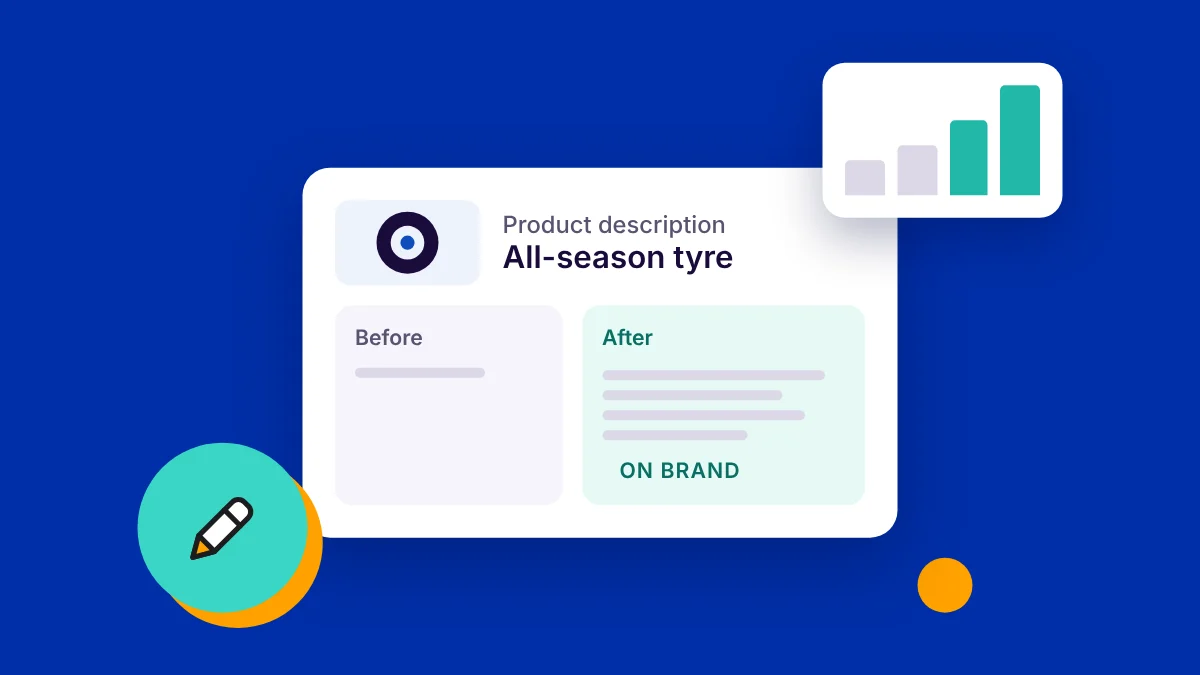
AI has changed how quickly teams can create, enrich, translate and optimise product content. What used to take weeks can now happen in hours.
But AI does not fix bad product data.
If your data comes from messy spreadsheets, incomplete supplier files, unclear attributes or inconsistent media, AI will still produce output. It just will not be reliable, accurate or safe to use.
AI does not understand context on its own. It works by analysing patterns in the data you give it. If the input is unclear or inconsistent, the output will be too.
Getting AI-ready is not about buying new tools first. It is about doing the hard product data work before that data enters your PIM or eCommerce platform.
This guide explains what that work looks like in practice.
AI-ready product data is structured, complete and governed information that machines can read, validate and reuse without guessing. It includes consistent attributes, clear taxonomy, reliable variants and controlled claims.
AI is not magic. It does maths at scale.
That means it will confidently repeat whatever issues already exist in your product data, only faster and across more channels.
If your data includes:
AI will copy and multiply those problems.
For example:
All it takes is one poor supplier file being accepted, and that error can spread across hundreds or thousands of products.
Now compare that to well-prepared product data.
When data is accurate, structured and governed:
AI rewards discipline. It does not replace it.
Before product data enters a PIM or eCommerce platform, it should already have these foundations in place.
You need a defined way to represent:
There should be one agreed structure that everyone follows. This becomes your single version of the truth.
Each product category should have:
For example:
This is what allows AI to generate accurate content and comparisons.
Categories are not just for navigation. They control which attributes apply to which products.
A good taxonomy:
Without this, AI cannot understand what matters for each product type.
Images, manuals and certificates should not sit in folders with random names.
They should be:
AI can only use media properly when it understands what it belongs to.
AI works best with structured data. That means doing this work upfront.
Before enrichment, fix the basics:
This step is not exciting, but it is essential.
Enrichment is not about adding more words. It is about adding meaning.
Focus on:
These are the details customers care about and AI needs to generate useful output.
AI needs rules.
Governance should not live in documents no one reads. It needs to be built into how data is prepared and approved.
This includes:
Every change should be traceable. Someone should always be accountable.
This protects your business as AI scales your content.
Basic AI suggests changes and waits for humans to act. That still creates bottlenecks.
More advanced approaches allow AI to:
Humans stay involved where judgement matters, especially for compliance and safety. AI handles the repeatable work.
This is how teams scale without losing control.
Review your top revenue and highest risk SKUs. Measure completeness, consistency and accuracy.
Agree one product and variant structure. Document it. Enforce it at onboarding.
Clean attributes, taxonomy and variant logic before generating new descriptions or translations.
Decide what must be reviewed by humans and what AI can handle automatically.
Start with one category. Measure improvements in speed, search performance, returns and rework. Feed those learnings back into your rules.
Do not ask:
“Can we fix our messy catalogue?”
Ask:
“Can we afford to let AI multiply that mess?”
The work you do before data enters your PIM or eCommerce platform determines whether AI becomes a competitive advantage or a liability.
Clean data in. Confident outcomes out.
We help teams do the hard product data work that comes before tools and platforms.
That includes:
If you want AI to work with your product data, not against it, let’s talk.
Because with AI, quality does not average out.
It compounds.

Fill in your details and we will send it straight over.
What your product data needs so AI search and shopping assistants can find and describe your products.

Talk to us about what AI-ready product data means for your catalogue.
