For furniture and home goods brands, the catalogue isn’t a list, but a powerful ecosystem of styles, finishes, sizes, and room-scene storytelling. But before you know it, one model of sofa can balloon into dozens of SKUs, each needing accurate specs, the right swatches, and imagery that sells the lifestyle. If you’re currently struggling to manage this through spreadsheets and the best of intentions, you need an escape plan, and a PIM will set you free.
Why home sector digital commerce quickly becomes a swamp
Furniture data goes pear-shaped for a few entirely predictable reasons:
- An avalanche of variants. So, a chair isn’t just a chair. It’s a chair with five fabrics, three leg finishes, and two sizes. Multiply that across ranges and seasons, and the burden of manual maintenance becomes a never-ending story
- Asset-heavy selling. Today’s customers want room scenes, close-up swatches, care guides, dimension diagrams, sometimes even 3D or AR to see how that sofa fits into their living room. The right visuals have to match the right variant
- Attribute anarchy. “Sage Green” becomes “Sage,” “Green Sage,” and “that one that looks a bit minty.” Without guardrails, your filters and SEO will inevitably suffer
- Omnichannel complexity. Your web shop, trade portal, marketplaces, social commerce, and printed catalogues all expect different formats, but with the same truth
It’s not rocket science to guess the outcomes:
- Inconsistent listings
- Slow launches
- Abandoned carts
- More returns
- More bad reviews and complaints
- Your people are condemned to spending more time reworking data than enhancing the CX.
How PIM brings order to the variant matrix
A fit-for-your-purpose PIM can be designed to handle high-variant catalogues without constant custom work. It supports your operations by:
- Enforcing parent-child structures: The base product sits at the parent level and each valid combination becomes its own child SKU.
- Automating attribute inheritance: Dimensions, care instructions, warranty, and assembly info can be entered once and reused safely across variants.
- Requiring variant-specific details: Fabric composition, colour codes and finish details can be mandatory before publication.
This saves time, but more importantly, it reduces the risk of the wrong product being delivered because some poor soul accidentally copied the “oak legs” SKU data into the “black metal” variant at 5:47pm on a Friday afternoon.
Making media behave like data
In home goods, imagery certainly isn’t for decorative embellishment – It’s a decision-making driver. As such, a PIM with integrated DAM treats this data as a true asset:
- Correct asset-to-SKU linking. For example, the blue velvet images attach to the blue velvet SKUs, not the “This is close enough” version.
- Channel-ready transformations. One master asset can feed hero shots, thumbnails, marketplace sizes, and social crops without the time-consuming drag of manual resizing.
- Faster creative reuse. Tagging assets makes it easier for your people to build seasonal edits and curated collections quickly.
When this is controlled centrally, it minimises the familiar “where’s the latest image?” scavenger hunt scenario. It also enhances information consistency across every single customer touchpoint.
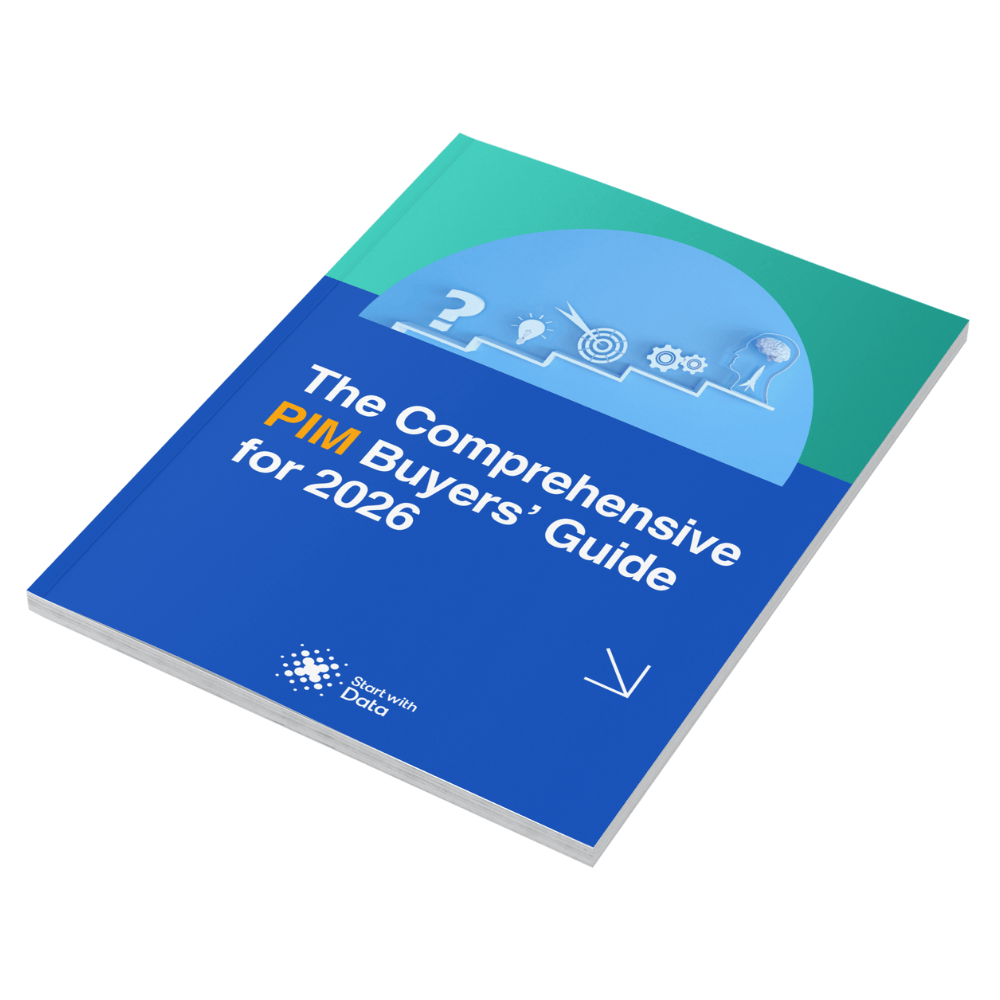
Confused by PIM Vendors?
With 100s of PIM software vendors worldwide, choosing the right PIM solution can be a daunting & confusing task.
Use our guide to assess PIM solutions against the right capabilities to make an objective and informed choice.
Turning structured data into lifestyle-led content
Furniture is a high-consideration and emotion-driven purchase, often involving several visits from different touchpoints. People don’t just buy a table; they buy the idea of a space for dinners which look like a Vogue magazine spread. So, once you have clean and structured core attributes in place, you can use AI-assisted enrichment to help you generate:
- benefit-led descriptions (benefits first + the features which enable them)
- channel-specific copy lengths and tones
- SEO-friendly titles and metadata
- Localisation tweaks and translations for new markets
Used mindfully, and with an appropriate degree of human oversight, you can lift the baseline quality of thousands of product pages without needing to expand headcount just so you can keep up with the catalogue changes.
Scaling across markets and channels
Home brands often grow across regions and countries with subtle but important changes: unit preferences, size naming, regulatory requirements, and cultural style cues, to name four variables.
A PIM enables you to implement:
- Localisation at scale: Translating and adapting descriptions while keeping a controlled master record.
- Consistent multichannel syndication: Pushing accurate, structured feeds to your eCommerce platform, marketplaces, and even print suppliers.
- More agile seasonal launches: Once workflows and templates are in place, your “new collection” panic becomes a repeatable process rather than a yearly crisis.
What to look for in a furniture-ready PIM
You don’t need a platform that’s “good in general.” You need one that’s good at your kind of complexity. You should be prioritising capabilities such as:
- flexible data modelling for variants, bundles, and modular sets
- strong integration with DAM (Digital Asset Management – images, videos and so on)
- validation and workflow tools
- AI support for content enrichment and quality checks
- robust and compliant channel syndication
- localisation features like translation and nuancing content for local markets
It’s like a stool with a wonky leg – if any of these elements are weak, you’ll feel the discomfort immediately in your day-to-day operations.
A real-world use case: Net World Sports
One of our clients, Net World Sports, is a large retailer of outdoor leisure and home goods. Their strategic aim was to scale internationally while keeping product copy and specifications consistent across digital touchpoints. However, their legacy approach made launches slow and error-prone.
We at Start with Data supported a PIM implementation focused on category structures, attribute sets, and governance. With a centralised, trusted data backbone, Net World Sports is now capable of launching international collections faster, as well as maintaining consistency across all channels. They’re also experimenting with new digital experiences without the hassle of having to rebuild data pipelines for every region.
The bottom line
For furniture and home goods companies, a PIM isn’t simply a database upgrade. It’s how you control variants, effectively harness the complexity of your data assets, improve search and filtering, and launch collections with less internal drama and more confidence in its success. It turns the act of scaling a catalogue into a competitive advantage, rather than a permanent operational headache.
Final words
If your catalogue is growing faster than your ability to manage variants, imagery and channel requirements, Start with Data can help you regain control. We support PIM selection, implementation and managed services for complex, high-asset product categories like furniture and home goods. Get in touch today and we can talk more about how we can help you build a catalogue engine which is both easier to run and harder to break.