If you use the same product content to try selling the same product to a busy, time-poor procurement manager and a browsing consumer yet to make a decision on what best solves her specific problem, it’s almost certain not to work one way or the other. Your B2B customer wants certainty. The individual customer wants confidence. The thing is both fully expect your product data to meet them with the most suitable information whatever channel they may be using.
Product Information Management (PIM) looks quite different in B2B and B2C contexts. The system may be the same, but the way we structure, enrich, and publish changes to that data is substantially different depending on who’s buying, and why. Our article digs down into these differences and outlines why a PIM solution is your go-to for dealing with these dual challenges.
Different buyers, different truths
At the heart of the B2B vs B2C divide is buyer intent.
B2C shoppers are more emotion-led, often in a hurry, and easily distracted. They’re comparing, browsing, imagining life with the product. Here, the product data needs to inspire trust quickly: perhaps with strong imagery, benefit-led product description, a balanced selection of reviews, and clear sizing or usage guidance. The unspoken question is simple:
Do I want this?
B2B buyers, on the other hand, are professional sceptics. They’re purchasing for pragmatic reasons: to solve operational problems, reduce risk, or meet internal or regulatory requirements. Their unspoken question carries a lot of weight:
Will this work, comply, integrate with…? –
(and can I rely on the information given or will I end up sending it back, like I did with the other distributor I used last time!)
A PIM platform is designed to serve both mindsets without forcing one ‘B2…’ to tread on the toes of the other.
Data depth: inspiration vs justification
Retail product data tends to be broad and expressive. Wholesale data is narrow, but deep, with highly unforgiving results if it isn’t exactly right.
In B2C, enrichment focuses on:
- Clear, engaging product titles
- Lifestyle imagery and videos
- Short, persuasive descriptions
- Reviews and social proof
- Simple but provable sustainability claims (“eco-friendly,” “recyclable”)
In B2B, enrichment is about completeness and traceability:
- Detailed technical specifications
- Compatibility or application data
- Certifications, safety documentation, and compliance codes
- Customer-specific pricing, pack sizes, and lead times
- Sustainability data suitable for ESG reporting or Digital Product Passports
For instance, an industrial product might carry 40–60 mandatory attributes before it’s even saleable. If you miss one out, the sale stalls, or worse, the buyer abandons your store and goes elsewhere. The product should never have gone live in the first place.
This is where spreadsheets should quietly surrender and let PIM take over.
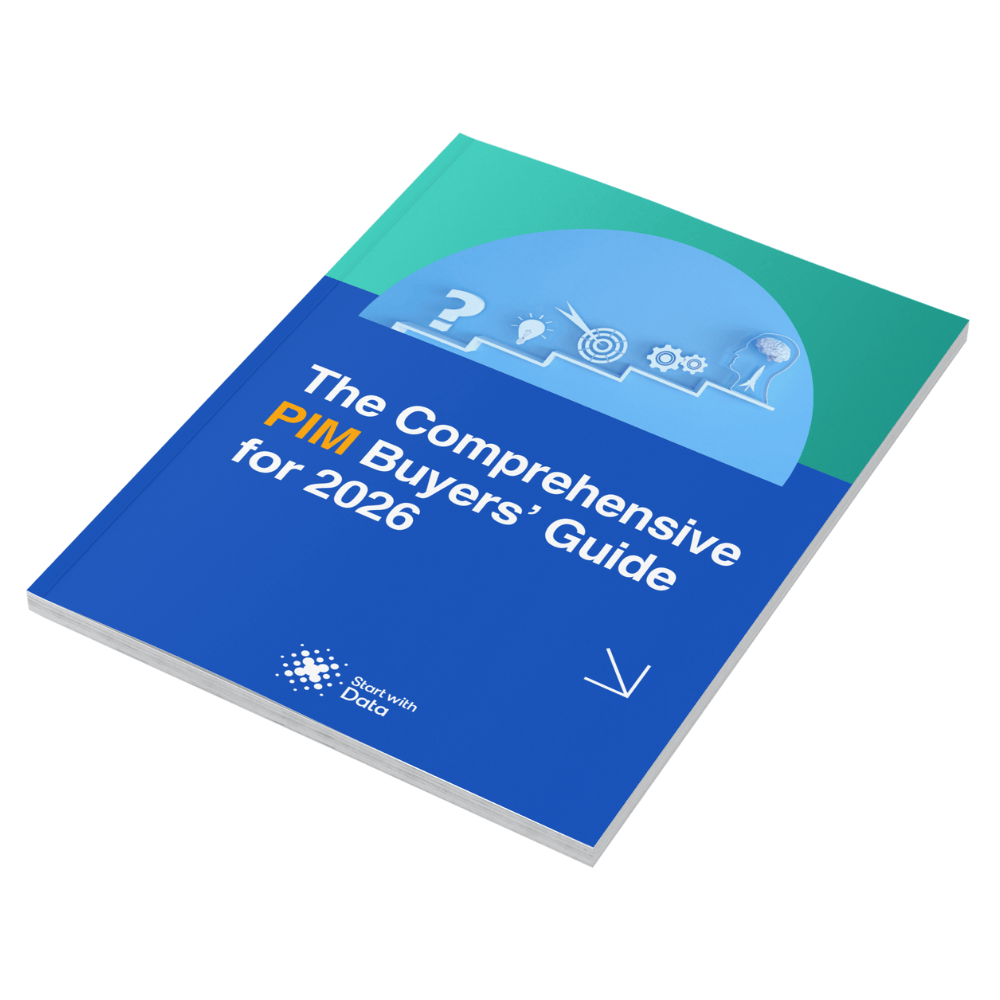
Confused by PIM Vendors?
With 100s of PIM software vendors worldwide, choosing the right PIM solution can be a daunting & confusing task.
Use our guide to assess PIM solutions against the right capabilities to make an objective and informed choice.
Content style: storytelling vs structure
We’ll make another distinction – B2C content seduces. B2B content reassures.
Retail descriptions are written to be read (or skim-read) by humans. They tend to highlight tone of the writing, benefits linked to features, and the aspirational spirit latent in most consumers. Product copy often answers emotional objections: Is it worth the money? Will it fit well with my self-image? Do people like me buy this?
Wholesale content is written to be scanned, filtered, and sometimes consumed by other systems. It’s functional, factual, and often even rather dry – by necessity. Procurement teams aren’t looking for poetry. They want solid proof of a product’s purpose and usefulness to their circumstances.
A good PIM enables both these scenarios to coexist. It will enable you to:
- Have one product, but with multiple descriptions
- One SKU, with different naming conventions
- One dataset, with multiple presentation layers
The content speaks the same language, and the information is TRUE in both cases. Let‘s just say they’re using different dialects.
Pricing and relationships: complexity vs convenience
The area of pricing alone can justify a PIM for a B2B merchant.
Wholesale pricing is frequently varied. It can be layered with volume breaks, customer agreements, regional terms, and contractual discounts. Product relationships are also functional: spare parts, replacements, compatible systems, alternatives if stock runs dry.
B2C pricing is altogether simpler and more immediate. Promotions, bundles and ‘frequently bought together’ rules are designed to increase basket size, not manage risk.
PIM provides the structure to manage both without leaking complexity into the wrong channel. For example, no consumer should see pallet pricing, and no buyer should have to take a stab in the dark to decide whether a component is compatible.
One PIM, two operating models
It’s increasingly common for organisations to operate across both wholesale and retail PIM becomes the organising layer between the conflicting expectations of B2C and B2B.
It can enforce governance protocols where precision matters, but also allow for flexibility, where persuading the indecisive consumer is at a premium. It makes sure that the procurement portal gets the comprehensive datasheet, while the eCommerce site gets the product story.
Most importantly for you internally, is that it enables teams to work from one source of truth, instead of trying to grab whatever info they can from two parallel realities. The sticking plaster solution is usually an uncomfortable compromise, and as we all know, compromise in product data management usually means errors.
Final thoughts: same products, different conversations
B2C product data exists to accelerate buyer desire.
B2B product data exists to minimise buyer uncertainty.
A modern PIM doesn’t have to choose between the two: It can orchestrate both. By modelling data, content and workflows around buyer intent, businesses can sell confidently into wholesale and retail markets without degrading customer experience.
When all’s said and done, the real challenge isn’t managing product data, but knowing who you’re talking to, and making sure your product data speaks their language. Get in touch with us today to talk further about how PIM can support both B2B and B2C product data models — from technical governance to content enrichment and multi-channel publishing.